What is RUF?
What is RUF?
RUF data was created with the intention of providing domain owners with redacted copies of emails that failed to pass the DMARC compliance test.
When seeking to establish the true origin of lawful email streams that require repair, domain owners can use the additional facts supplied in forensic reports. Most DMARC reporters do not conduct RUF reporting due to privacy concerns regarding incomplete or poor redaction. The goal is to avoid data breaches and to follow all applicable rules and regulations regarding sensitive and personal information. RUF is a more comprehensive report because it includes more information about emails, such as the subject, header, attachments, and URLs. RUA reports may contain the following information:
- IP information
- Subject line
- The time when the message was received
- Message-ID
- URLs
- Delivery result
- SPF, DKIM, and DMARC results
- ISP information
- From domain information
RUF As Compared To RUA
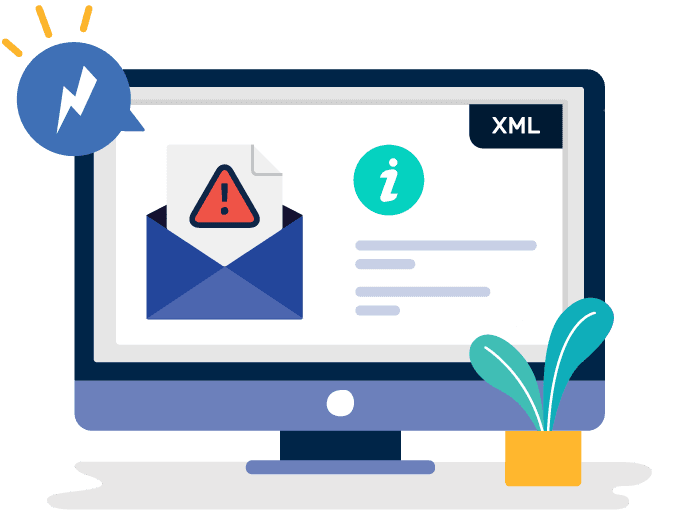
| RUF | RUA |
| Provides details of an individual email | Provides aggregate data on a group of emails |
| To receive failure reports, set up the ruf tag | To receive aggregate reports, set up the rua tag |
| Sent almost immediately after the failure | Sent every day by default |
| Contain personally identifiable information | Don’t contain personally identifiable information |
| Supported only in some of the mailbox providers | Supported in all DMARC-compliant mailbox providers |