BIMI (Brand Indicators for Message Identification)
What is BIMI?
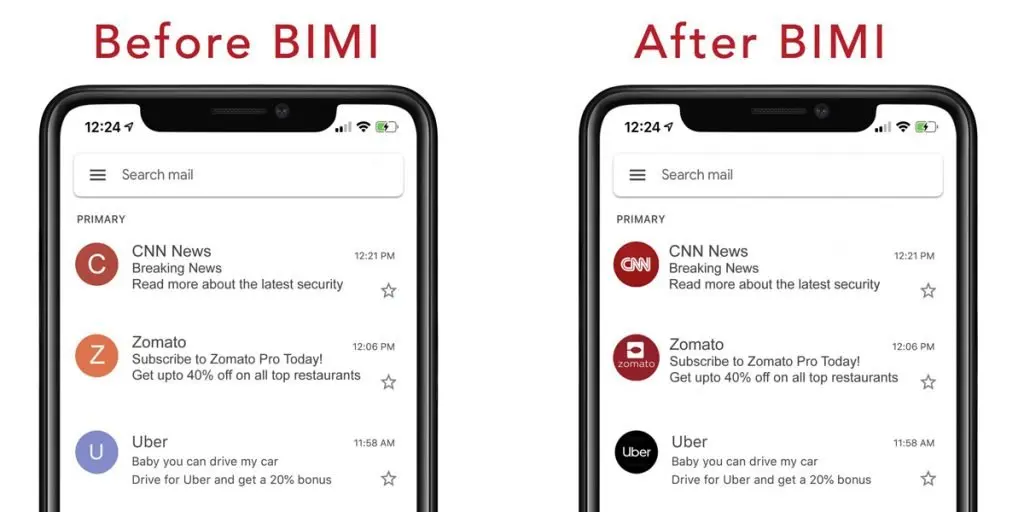
Email marketers are always in search of ways to obtain better engagement and visibility among their subscribers, eventually resulting in increased opening and conversion rates. BIMI stands for Brand Indicators for Message Identification, which is a new standard that makes it easy to have a user’s brand appear alongside their message in the inbox. Not only does this improve brand visibility but also increases deliverability by preventing fake emails.
BIMI is an important tool that helps build trust and provide a better subscriber experience, something that all organizations strive for at every level of an email program. In an email inbox, BIMI assists recipients in recognizing a brand. This builds trust, which can help an organization increase their deliverability.
BIMI is based on DMARC. The related domains must first be validated by DMARC to guarantee their authenticity before the brand’s logo is displayed as part of BIMI. By using the company’s investment in DMARC from a visibility and cybersecurity perspective, BIMI helps to increase the brand’s value.
Several aspects improve as the legal brand emblem becomes more recognizable among various audiences. It can increase email engagement while minimizing the possibility of successful brand impersonation and email-borne attacks like phishing, spoofing, and Business Email Compromise (BEC).
BIMI is still in its infancy as only a few big email providers offer it. However, it still continues to be an intriguing and relatively new standard that has caused a stir in the industry. The two important factors for deploying BIMI are having a DMARC policy in place and maintaining a good reputation as an email sender.

Why is BIMI Necessary?
Because of the increased security it provides, BIMI is beneficial to both senders and mailbox providers. If a mailbox provider supports BIMI, it offers an extra layer of authenticity to all communications, thus increasing the probability that they will be delivered. Subscribers will also be more likely to recognise the brand, which decreases the possibility of them marking the brand email as spam.
Following are some of the reasons why an organization needs BIMI:
- It uses behind-the-scenes security updates
BIMI is based on DMARC, which necessitates some behind-the-scenes changes to make the brand logo appear automatically in participating inbox providers. Finally, it protects the brand’s reputation and ensures that no one impersonates the brand’s official domain.
- It protects brands and customers from impersonation attacks
Business email compromise (BEC) attacks, in which a cybercriminal spoofs an organization’s email address and impersonates a company executive or other trusted senders, are becoming a growing threat. If BIMI is broadly implemented, fraudsters will have a hard time impersonating brands via email. While it may be difficult for the ordinary user to spot a well-crafted spoof domain, the absence of a brand logo in an email will become an instantly apparent red flag over time.
- It protects subscribers from phishing attempts
BIMI improves customers’ ability to recognize messages sent by a brand, thereby protecting them by making it easier to spot messages that are not authentic. BIMI’s architecture makes it particularly useful for high-risk businesses such as banks, social media platforms, and major retailers.
- It draws attention and trust to your messages
The brand’s logo in the inbox, which helps communications stand out and drive more customers to open it is the most evident benefit of BIMI-compliant mail.
Getting Ready for BIMI
There are two important factors for deploying BIMI:
- Have a DMARC policy configured (set to either p=reject or p=quarantine)
- Maintain a good reputation as a sender (via a high engagement rate with low bounce and spam complaints)
Having DMARC’s underlying technologies, SPF and DKIM, configured shows the world that an organization is concerned about their domain’s reputation, which boosts brand reputation as a sender, despite reputation’s subjective nature. DMARC is a basic security protocol that will be used to build future domain security initiatives.
How Does BIMI Work?
BIMI is a text record that resides in an organization’s DNS records on its transmitting servers. When an email is sent, the recipient’s inbox provider sends a DNS query to obtain the sending organization’s BIMI text record. This BIMI text item contains the position of the organization’s logo.
For more information, read how to create a BIMI record.
To use BIMI, an organization must already have SPF or DKIM, as well as DMARC, set up. While these criteria protect a domain from being spoofed, they do not give the receiver a visible indication that the email sender has been verified. The legitimacy of BIMI-compliant domains will be demonstrated by a cryptographically secured logo, allowing the average end-user to clearly identify authentic senders.